
Beyond the Scale: Science-Backed Ways to Improve Insulin Resistance That Have Nothing to Do with Weight Loss
- Dr. Meghan Tierney, DABOM MSCP

- Sep 16, 2025
- 5 min read
Here is what you should know: improving insulin resistance does not require you to chase a number on the scale.

In fact, research shows that many of the most effective strategies for enhancing insulin sensitivity work regardless of weight changes. And some work even when weight loss doesn't happen at all.
This matters because insulin resistance is common, and estimated to affect up to 30% of women in midlife and more if they have polycystic ovarian syndrome. This is important because insulin resistance can progress to type 2 diabetes, increased cardiovascular risk, and metabolic syndrome. Unfortunately, the conversation can be dominated by weight-centric approaches that often miss the bigger picture.
Today we are talking about the science-backed strategies that actually move the needle on insulin sensitivity.
What Insulin Resistance Really Means
Before we dive into solutions, let's get clear on what we are actually addressing. Insulin is a hormone produced by your pancreas when you consume carbohydrates or when your blood sugar is high. Resistance occurs when your cells become less responsive to the insulin and don't appropriately use the glucose found in your blood stream to power your cells.When this happens, your body produces more insulin to try and maintain normal blood sugar levels. Over time, this system can become overwhelmed, leading to elevated blood sugar and could progress to type 2 diabetes.
Here is the thing, insulin resistance can be associated with body size but it is not a linear correlation. And while weight loss has traditionally been prescribed as the primary treatment, research shows that metabolic improvements can -- and do -- happen independent of weight changes. For some people, intentional weight loss may be part of an effective treatment plan, but it doesn't have to be the cornerstone of care. And it's certainly not the only path to better insulin sensitivity.
The Movement Medicine Approach
Guess what? Exercise alone can reduce the risk of developing diabetes by 44-65% independent of weight loss.
The research is clear that combining both aerobic exercise and resistance training yeilds the best results for insulin sensitivity. But here's how to think about it practically.
Start where you are. If you're new to movement, a 20 minute walk or 10 squats after meals can significantly blunt post-meal blood sugar spikes. And surprise! 3 sets of 10 squats is approximately equivalent to a 30 minute walk after a meal!
Timing matters. Low-intensity movement immediately after eating is a particularly powerful for improving how your body process glucose. Movement is medicine!

Strength training is non-negotiable. Muscle tissue is metabolically active and helps your body use insulin more effectively. This isn't about hard bodies, this is about creating a more insulin-sensitive environment in your body.
The Timing Revolution: When You Eat May Matter
One of the most fascinating developments in insulin resistance research involves when we eat, not just what we eat.
Front-load your day. Consuming the majority of your calories and carbohydrates earlier in the day, particularly at lunch or early afternoon, is associated with improved glucose metabolism. Your body's natural circadian rhythms make you more insulin-sensitive in the morning, so your body is already more efficient at using the energy you are consuming.
Consistency counts. Eating at regular times and maintaining a consistent number of meals per day appears beneficial for metabolic regulation. Your body thrives on predictable patterns.
Consider an evening cutoff. Avoiding late evening meals or snacks can support better glucose metabolism. This isn't about calorie restriction, it's about working with your body's natural rhythms. The research shows that keeps meals with a window of less than 10 hours and ending at 3PM consistently improves insulin resistance and blood sugar control, independent of weight loss. This is pretty intense! If this feels reasonable for you, go for it! But you can be inspired by the idea and have an early dinner around 5PM or 6PM and then not eat for the rest of the evening.
HOT TIP: Many women will tell me "But I'm not a breakfast person!" But here's what I have noticed, these same women will also share that they eat dinner at 8PM or 9PM at night or eat big snacks after dinner. Of course, they aren't hungry in the morning! Their body is still processing that late-night fuel. If you limit your snacking or meals late at night, your morning hunger will probably return.
The Order of Operations: How You Eat Matters Too
Here's a simple strategy that can make a real difference: the order in which you eat your food.
Start with vegetables and protein. Consuming low-energy-dense foods like vegtables and salads first, followed by protein sources, and then starchy carbohydrates, leads to lower post-meal glucose and insulin responses.
This isn't about complicated rules, it's about a menu of simple modifications that support your metabolic health.
The Dietary Pattern Approach (Not Another Diet)
The evidence supports several dietary patterns for improving insulin sensitivity, and here's the key: no single approach is best one for everyone.
Mediterranean-style eating emphasizes whole grains, healthy fats, vegetables, and moderate amounts of protein. It's sustainable and has strong research backing.
Lower glycemic approaches focus on choosing complex carbohydrates over simple ones. which helps moderate blood sugar responses. This can be supercharged with the use of a continuous glucose monitor!
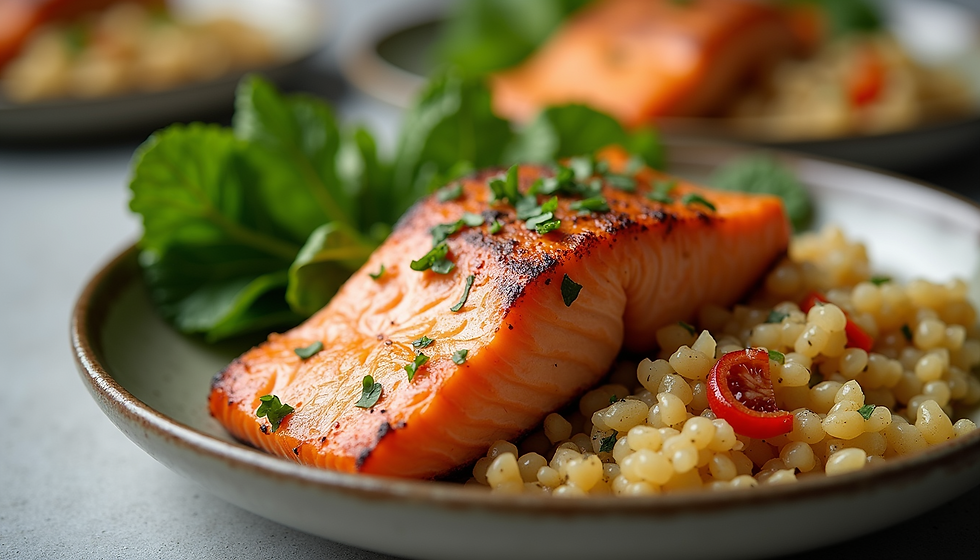
Plant-forward patterns including vegetarian or plant-based approaches can improve insulin sensitivity and are often easier to maintain long-term than restrictive approaches.
The through-line? Whole foods over processed ones, consistent eating patterns, and approaches you can actually sustain.
Special Considerations for Women
If you have PCOS: You're not broken, and insulin resistance isn't your fault. The strategies that are shared here will work for you too! Higher protein intake and attention to micronutrients like vitamin D and omega-3 fatty acids may provide additional benefits. You can also consider supplementing with inositol which has been shown to improve insulin sensitivity in women with PCOS.
If you're in perimenopause of menopause: Focus on preventing metabolic disruption during the transition. This is a time of great change in your body so any lifestyle changes you decide to pursue should be chosen in the context of all that is going on in your life. Start small!
The Bottom Line
Improving insulin resistance is about so much more than weight loss: It's about:
Moving your body in ways that feel good and fit your life
Eating patterns that work with your natural rhythms
Creating sustainable habits rather than pursuing dramatic overhauls
Working with healthcare providers who understand that health isn't measured by the number on the scale
Your metabolic health matters regardless of your body size, And the strategies that improve insulin sensitivity often enhance energy, mood, and overall well-beling in ways that go far beyond any number,
What This Looks Like in Practice
Start small. Choose one strategy from this post. Maybe it's the 10 minute walk after dinner or eating your veggies or salad before the main dish.
Be consistent. Small, sustainable changes practices consistently (not perfectly!) will always trump dramatic overhauls that you can't maintain.
Get support. Working with healthcare providers who understand weight neutral approaches to metabolic health can make all the difference in your journey.
Remember: You are a whole person deserving of care, respect, and evidence-based treatment regardless of your weight, body size or health status.
Ready to explore a different approach to metabolic health? At Sorrel, we specialize in evidence-based, weight-neutral care for women navigating PCOS, perimenopause, and metabolic health concerns. We're here to support your whole health journey—not just the numbers.
Want to learn more about how we can support your metabolic health goals? Book a discovery call to explore how personalized, compassionate care can fit into your life.



Comments